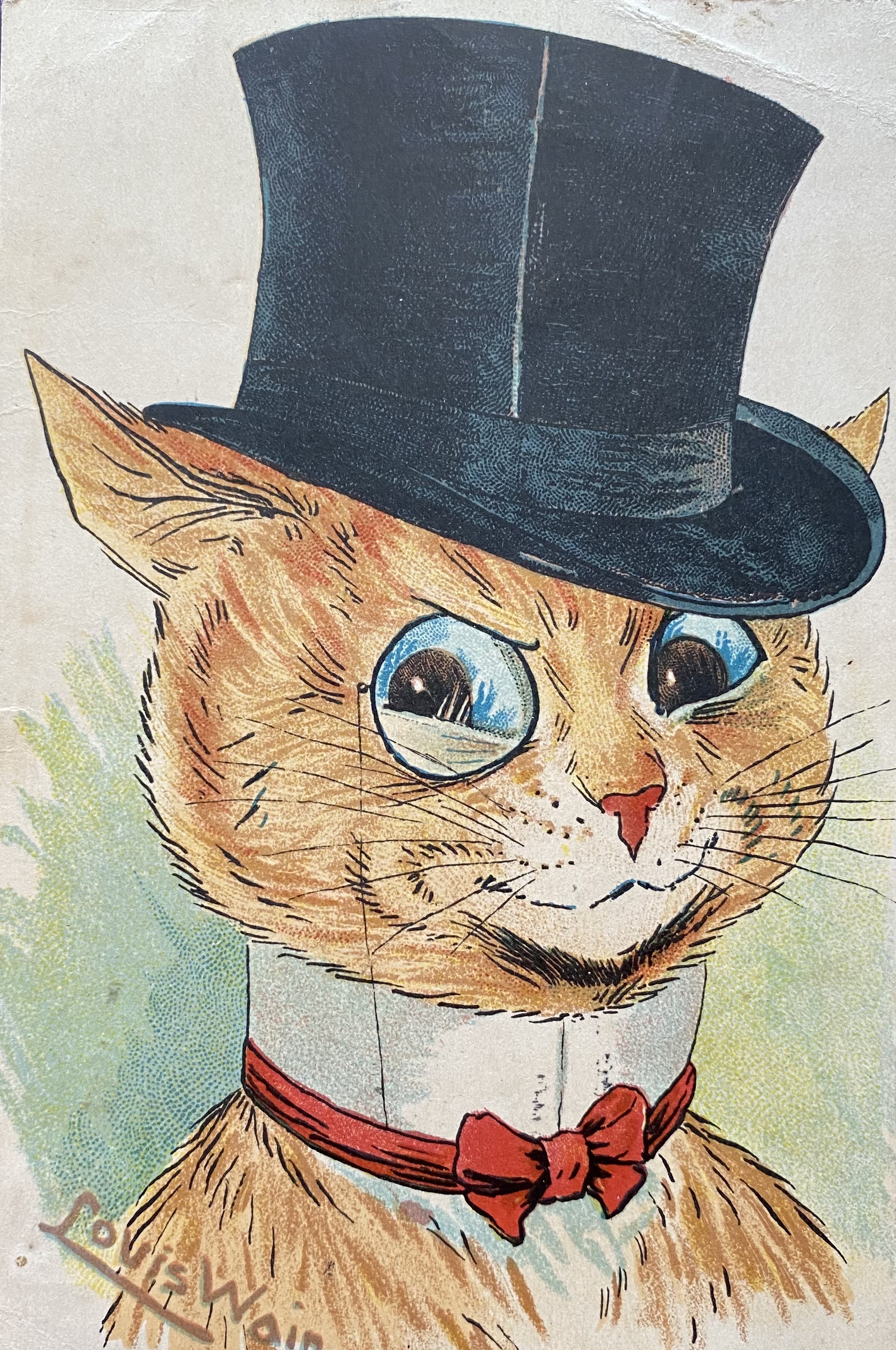
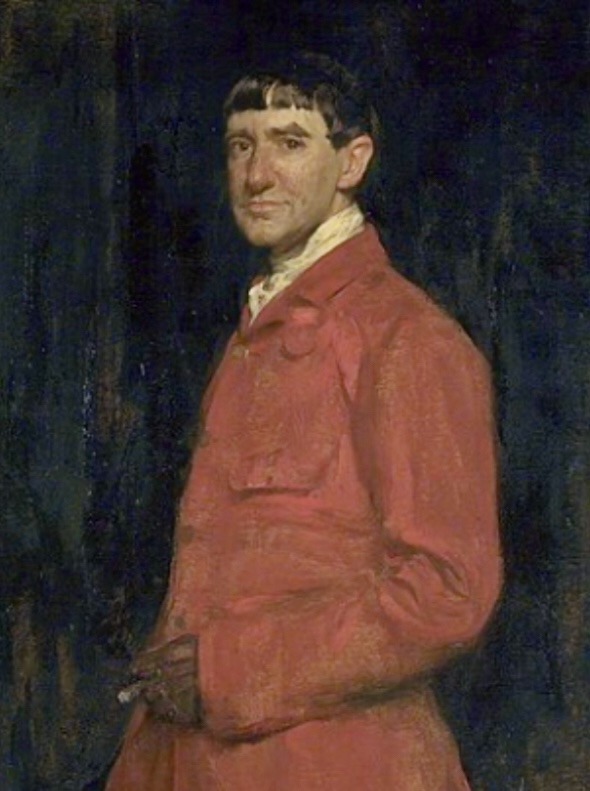
No matter whether he was drunk or sober, the output of postcard artist Phil May (1864-1903) never faltered. The Yorkshire native survived homelessness to become Punch magazine’s most popular comic illustrator–without completing a single art class. Despite his erratic behavior and increasing alcoholism, May was beloved by a large circle of loyal friends. They even helped him conceal an illicit affair. Long after his death, the story Phil concocted to cover up his affair was still being repeated as fact. Here is the truth about the secret life of England’s greatest comic illustrator.

A CHALLENGING CHILDHOOD
Philip William May was the seventh of eight children. He was born on 22 April 1864 to Philip May and his Irish wife Sarah Jane Macarty at 66 Wallace Street, New Wortley, Leeds, Yorkshire. His father was a failed businessman with a drinking problem. In 1866 Mr. May was arrested for embezzling money from his employer, John William Clay, of the Waterloo Colliery.. He was sentenced to two months’ imprisonment and hard labor. Mr. May died when Phil was nine, plunging the family into poverty. The young lad left home for Leeds at about age twelve, working in a variety of odd jobs. Most of them ended with him getting fired for various transgressions such as spilling ink on architectural drawings.
FIRST PUBLISHED SKETCH
In 1878, when he was fifteen, Phil’s first published sketch appeared in Yorkshire Gossip magazine. Despite his considerable artistic talent, the young lad dreamed of becoming an actor. In 1879, he began doing odd jobs at the Grand Theatre in Leeds in hopes of achieving his dream. Phil later described an event that foretold his dismal acting record. “The first time I went on the stage – I fell off it.” To make ends meet, the young lad began sketching actor’s portraits for the theatre’s playbills.
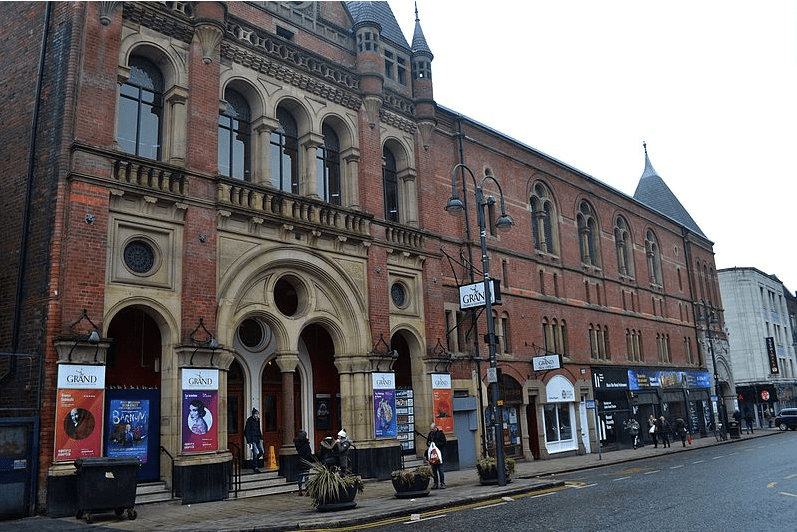
From 1880 to the winter of 1882, Phil toured Northern England as an actor playing bit parts in a traveling troupe. The company returned to Leeds for Christmas 1882. For a while, Phil combined acting with working as a costume designer for the Grand Theatre. One of his performances drew the attention of Mrs. Sarah Elizabeth (“Lilian”) Emmerson Farrar, a Leeds resident.


PHIL MAY’S SECRET
Sarah Elizabeth “Lilian” Emmerson and John Farrar married on March 9, 1880. She was a 23 year old confectioner and he was a 28 year old rag dealer. By 1882, the Farrars owned a restaurant across the street from the Grand Theatre in Leeds. Phil was a regular customer, often eating lunch at their shop. Mrs. Farrar introduced Phil to her husband and they became friends. During the winter of 1882, Lilian and Phil’s friendship erupted into an extramarital affair-when he was 18 and she was 25.
PHIL GOES BROKE
Late in December 1882, Phil left Leeds for London to find acting jobs. He spent most of his money on a train ticket. In London Phil soon ran out of money. The aspiring actor went to his maternal aunt, Mrs. Morton in Islington, for help. She was not pleased when he showed up. Phil’s aunt and her husband, actor Fred Morton, reluctantly let him stay overnight. In the morning, they bought Phil a train ticket and packed him off to his mother in Leeds. Lilian Farrer was waiting.
HOMELESSNESS
Most sources claim that Fred Morton didn’t want to compete with Phil for acting jobs, so he kicked his nephew out. It’s also possible that Mrs. Morton found out about Phil’s affair- either from himself or his mother. The Mays were staunch Catholics. Lillian Farrar was not only married, she was a Protestant. Such transgressions were common causes of family conflicts. Instead of returning to Leeds, Phil got off the train and walked back to London. Shame and embarrassment may have kept the young artist from going home.

Rather than face his mother, Phil May became a homeless beggar for about a year from late 1882 to the winter of 1883. He slept under costermonger’s barrows in Covent Garden and sold sketches of famous actors to survive. Eventually, Phil had to return home to his mother when he became ill from malnutrition.

PHIL GETS A BREAK
Phil’s big break came in late 1883 when William Allison, founder of St. Stephen’s Review, saw a print made from his sketch of three famous actors. Shortly afterwards, Allison’s staff artist failed to submit suitable sketches for the Christmas 1883 issue. Allison remembered Phil May’s sketch and tracked him down. According to Allison, Phil completed four full-page sketches and a half-page drawing in forty-eight hours, saving the Christmas edition. For a while Phil struggled to make ends meet, but eventually William Allison made him a staff artist at St. Stephen’s Review. Phil held the position for about two years.
FAKING MARRIAGE
In January 1884, after he was hired by Allison, May moved from Leeds to London, renting a flat at 66 Waterloo Road. The following month, Lilian Farrar disappeared. She left her husband John and their one-year-old daughter Lucretia to move in with Phil. The illicit couple concocted a story, claiming they had wed in Leeds in April 1884, “after Lil’s earlier marriage to a Charles [sic] Farrar.” No marriage record for Phil and Lilian has been found in England.


LIVING WITH A MARRIED WOMAN
Mr. Farrar probably discovered his wife’s wherabouts from an acquaintance named Eva Baxter. Mrs. Baxter lived on Woodhouse Lane in Leeds not far from Phil’s mother.. She or Mrs. May probably caught Phil and Lilian together as the postcard below appears to suggest. Phil often wore clothes with pearl buttons. The couple in the sketch bear a significant resemblance to Phil and Lilian in their dress and appearance.
Mrs Eva Baxter traveled from Leeds to London to get some money that Phil or Lilian owed her. Much to Mrs Baxter’s surprise, she found Lilian cohabitating with Phil in his flat. Afterward, according to Reynold’s Newspaper, Lilian Farrar wrote Mrs. Baxter a letter saying “you known I am living with Phil May, but you must keep it dark.” Phil’s career and Lilian’s reputation would be ruined if the public learned of their illicit affair.

THE AFFAIR DISCOVERED
After learning of his wife’s whereabouts, John Farrar went to London. He waited near the flat until he saw Phil leave. Mr. Farrar then confronted Lilian when she came outside with Mrs. Baxter. Lilian told John that she wouldn’t have left him if he had treated her properly. Mr Farrar denied her accusations. He left without convincing her to return to their home in Leeds. For a while, Mr. Farrar lost track of Lilian’s whereabouts.
HOW TO AVOID SCANDAL?
On September 15 1885, Phil May got another big break. He signed an employment contract with the Sydney Bulletin. He received a 300 percent pay increase compared to the amount he had earned at William Allison’s magazine. As a result, Phil would become the highest paid staff artist in Australia. The pay increase and the potential for scandal compelled Phil and Lilian to leave England.


DIVORCE PETITION FILED
During the Fall of 1885, Mrs. Baxter wrote John Farrar a letter warning him that Phil and Lilian were planning a trip to Australia. John Farrar jumped into action to file a divorce petition before his wife left England. He named Phil May as co-respondent. Mr Farrar and Mrs. Baxter provided evidence for the jury.
GUILTY OF ADULTERY
The divorce petition states that Lilian committed adultery with Phil “on the 6th day of February 1884 and on diverse other times at […] 8 Agar Street, Strand and 66 Waterloo Road London.” John Farrar provided his sworn affadavit on 9 November 1885. He asked for 1000 pounds in damages. The judge found Lilian guilty of adultery. Phil May was required to pay John Farrar damages of 750 pounds. (the equivalent of 114,000 pounds today!) Mr. Farrar’s divorce petition was filed on 10 November -one day before his wife left for Australia with Phil.

ESCAPE TO AUSTRALIA
On 11 November 1885, Phil and Lilian left for Australia aboard the SS Orient. The unmarried couple traveled as Mr. & Mrs. May. British newspapers were informed that Phil needed to be in a warmer climate for his health. He had developed tuberculosis, probably after visiting infected children in London Hospital. Phil’s friends also concocted a story that he left England in an effort to stop drinking. Phil could easily get alcohol in Australia’s clubs, restaurants and bars, so this makes no sense.
William Allison wrote that “there were other reasons besides the pecuniary inducement which caused Phil to go [to Australia].” Allison’s memoirs openly described Phil’s ill health and excessive drinking. According to William Allison, these were not Phil’s “other reasons” for going to Australia. He was probably alluding to Lilian’s adultery with Phil May and the events that followed. In reality, the move to Australia had more to do with Lilian’s divorce than Phil’s health.
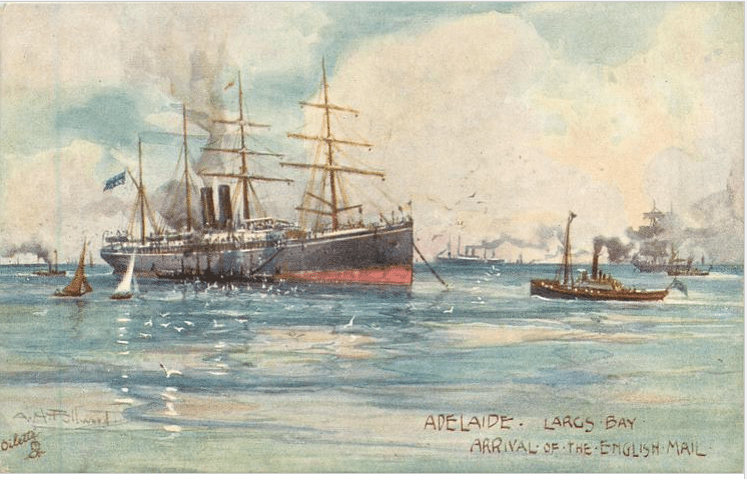

After arriving in Adelaide, Australia on 23 December 1885, Phil and Lilian lived in Melbourne for a few months. No word of Lilian’s divorce appeared in British newspapers until January 1886. William Allison may have used his journalistic connections to suppress the story until Phil and Lilian were safely in Australia.


In February 1886, the couple moved to Sydney, where they rented a flat at the intersection of Pitt and Bathurst streets. Later the couple moved to a hotel on the corner of Castlereagh and Hunter Streets near the Botanical Gardens. Fortunately for Lilian and Phil, Australia was less concerned with propriety and social standing than England. They appear to have escaped any public censure.
MARRIAGE IN AUSTRALIA
On 31 May 1887, Phil May and Lilian Emmerson Farrar got married in an Anglican church in Sydney. During the three years they were in Australia, Phil produced 900 sketches for The Bulletin. Such an enormous output suggests he may have been under pressure to pay off the divorce damages.
A FAMILY RIFT HEALED?
When Phil’s contract with The Bulletin expired, the Mays spent four years traveling in Europe. In 1889, May returned to London briefly to cover a society ball. While in town, he visited his mother, whom he hadn’t seen in seven years. The last time Phil had seen his mother was in 1882- when his affair with Lilian began. This indicates a rift beftween mother and son. Later, Phil’s mother authenticated some of his sketches by writing on them “verified by Sarah J. May, Mother of Phil.” It seems the two may have reconciled during Phil’s visit.

Mr. and Mrs. May returned to live in London in 1891. The following year, Phil had his photo taken and inscribed a copy “to Lucretia from your affectionate friend Phil.” This suggests that Phil and his wife felt their position in society was secure enough to warrant reconnecting with Lilian’s daughter Lucretia Farrar.
In 1895, Phil was made a staff artist for Punch magazine and his portrait appeared in Vanity Fair. He had become a celebrity. Unfortunately, as his fame skyrocketed, so did his craving for alcohol.
COMING SOON: Part 2: Drinking in Fame
Copyright 2023 Barbara A. Ross
Sources:
Allison, William. My Kingdom for a Horse. “Divorce Cases. The Globe, London, 16 Jan. 1885.
“Farrer (sic) vs. Farrer and May” Reynolds Newspaper 24 Jan 1886. p 2.
Houfe, Simon. Phil May: Life and Work, 1864-1903. London: 2001.
Lane, Richard, “Seeing him Home” Lilliput magazine, 1954.
May, Phil. Phil May’s Guttersnipes. London: Leadenhall Press, 1896.
Moore, Augustus. The Phil May Album, London: Methuen, 1900.
O’Connor, Thomas Power. In the Days of My Youth. London: Pearson, 1901.
Seaman, Owen. “Phil May,” Punch, 12 Aug. 1903.
Stephens, Alfred George. Phil May in Australia. London: 1904.
Thorpe James, Phil May: Master Draughtsman and Humorist 1864-1903. London, Harrap, 1932.
Also: England and Wales Divorce Records 1858-1918, http://www.ancestry.com. ; England and Wales, Civil Registration Marriage Index, 1837-1915?, http://www.ancestry.com.; UK and Ireland Finda a Grave Index, 1300s-Current, www. findagrave.com; and Yorkshire, England, Quarter Session Records, 1637-1914, http://www.ancestry.com.
 Artist-Signed Postcards
Leave a comment