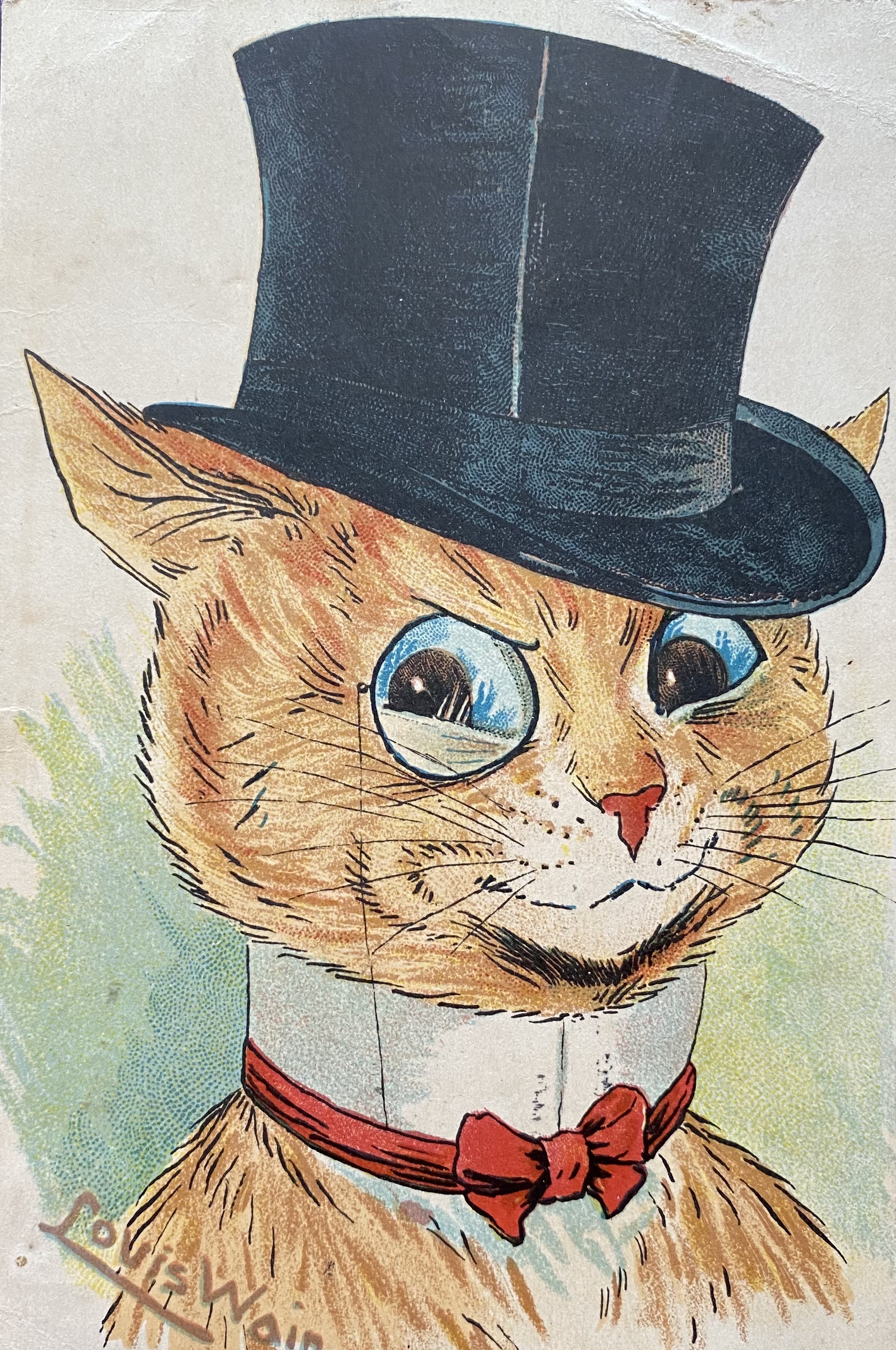
A Postcard Publishing Mystery
By Anne Ross
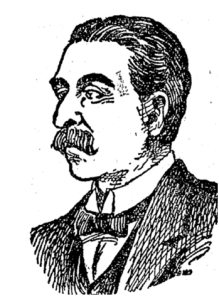
RAPHAEL TUCK’S FAMILY SKELETON
During the Victorian and Edwardian eras, postcard publisher Raphael Tuck & Sons struggled to keep a family skeleton in the closet. His name was Hugo Tuck. Hugo carried a secret that could destroy his father’s postcard publishing company. At Raphael House in London, all was not merry and bright.
A JEWISH FAMILY’S CHRISTMAS CARDS
Raphael Tuck was born in Koschmin Posnana, Prussia (now Poland) on August 17 1826. In 1848 he married Ernestine Lissner. Their seven children were all born in Prussia: Herman, Julie, Adolf, Rose, Gustav, Minnie, and Hugo (1862-1919). During the early 1860s, the family emigrated to England. By 1866, Raphael Tuck was selling art prints at a small shop on Union Street in London. His four sons worked their way up in the family firm; holding positions such as clerk, shopman, traveling salesman, and picture dealer. Despite rampant antisemitism, the Tucks were one of several Jewish families to establish successful international businesses in Britain during the late 1800s. Ironically, the family’s success had its roots in Raphael’s 1871 decision to become England’s first Christmas card publisher
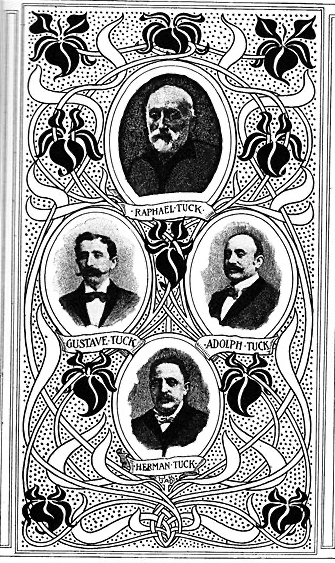
source: Wikimedia Commons.
SIGNS OF TROUBLE
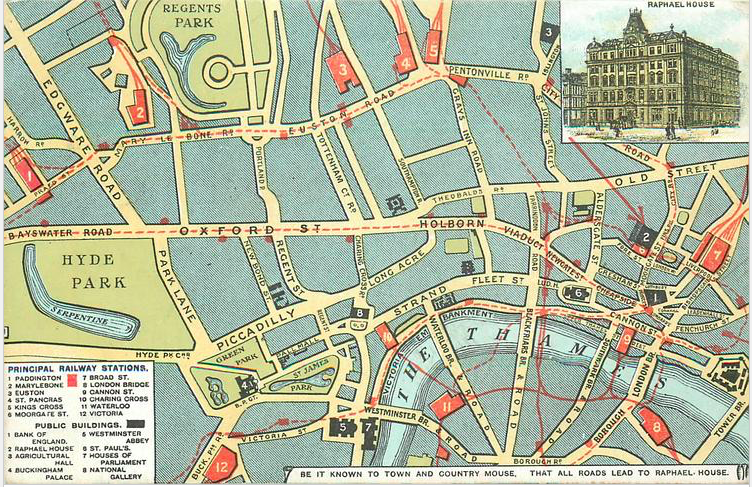
In December 1881, Raphael Tuck retired. The following month, he made Herman, Adolf and Gustav company directors. Hugo, who was working as a clerk, was only promoted to Sales and Showroom Manager. Afterward, Hugo Tuck’s name virtually disappears from company publications and newspaper articles profiling the firm. In 1900, Raphael Tuck died-one year after constructing a new office building called Raphael House. Fortunately, Raphael only saw the first stage of his youngest son’s downfall-which began with Hugo’s marriage.

Source: http://www.ancestry.com
HUGO’S ROCKY MARRIAGE
On Christmas Eve in 1896, Hugo Tuck married Rosette Louise Gottschalk at London’s St. John’s Wood synagogue. He was 32 and she was ten years younger. Rosette was the daughter of a wealthy merchant. After their marriage, the couple lived at 16 Aberdare Gardens in London. In 1907, Mrs. Tuck filed for divorce on grounds of cruelty. At the time of their divorce, the Tucks were living at 6 Portman Mansions, Chiltern Street, London. The divorce petition is fifty-one pages long. Rosette’s affidavit records her husband’s “violent temper” and his intention “to ignore her until she consented to his retiring from business.”
Source: http://www.tuckdbpostcards.org
WAS HUGO’S WIFE HIS “BEARD?”
According to Mrs. Tuck, Hugo’s cruelty and neglect began one month after their wedding. Rosette describes numerous occasions between January 1897 and 1908 when Tuck left her alone all night when she was ill. Despite her illness, Hugo forced her to go out with him to London’s music halls and theatres. Mrs. Tuck declared that Hugo’s conduct “aggravated and intensified the asthma from which she suffered… and brought on nervous depression and…great mental anguish.” Finally, Rosette Tuck’s affidavit states that their marriage was never consummated. It appears that Rosette was Hugo’s “beard” used to conceal his homosexuality from society.


Popular entertainment spots in London that Hugo may have visited. Source: http://www.tuckdbpostcards.org
HUGO DENIES EVERYTHING
Hugo responded to the divorce petition by denying his wife’s accusations. Their divorce was finalized in 1909. The settlement required that the two Tuck brothers serving as trustees under the Marriage Settlement Trust were to be replaced. This suggests a rift between Hugo and his brothers.
DIVORCE PAPERS REVEAL GAY LIFESTYLE
The divorce petition lists the locations, dates, and times of Hugo Tuck’s assignations with his lover, William Henry (“Willie”) Rolfe. Willie was a minor. The divorce papers leave no doubts about the nature of their relationship. While he was still married, Hugo was renting a flat at 24 Haymarket in London for his trysts with Willie. The Haymarket neighborhood was popular with prostitutes and gay men. Rosette’s affidavit shows that Hugo moved frequently, probably to avoid police raids. At this time, gay sex was illegal in England. A conviction carried a sentence of ten years imprisonment.

HUGO TUCK: ANOTHER OSCAR WILDE ?
Hugo’s wedding took place about eighteen months after Oscar Wilde’s 1895 conviction for “gross indecency” with Lord Alfred Douglas. The trial was widely covered by the media. Afterward, Wilde was ostracized and his career as a playwright was ruined. He died in exile in France. Did Oscar’s fate influence Hugo Tuck’s decision to marry? He must have feared a similar outcome..
Source: http://www.tuckdbpostcards.org
HUGO’S NIGHT LIFE IN LONDON
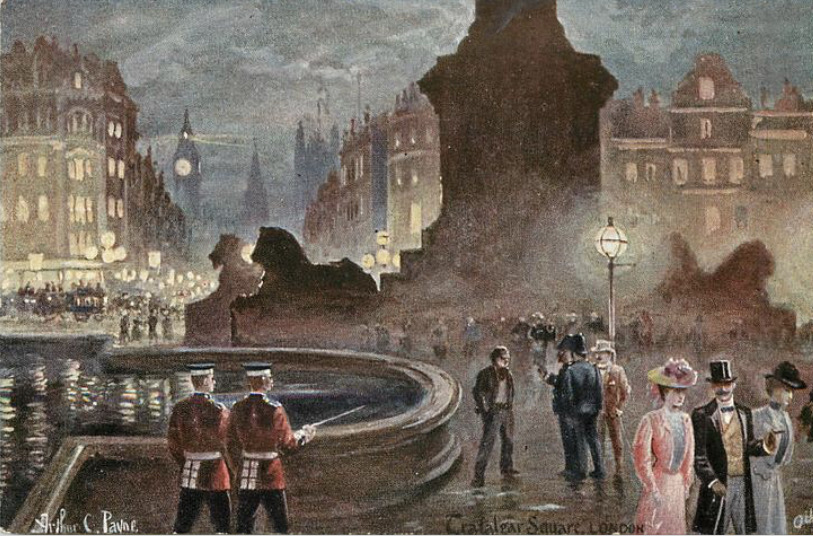
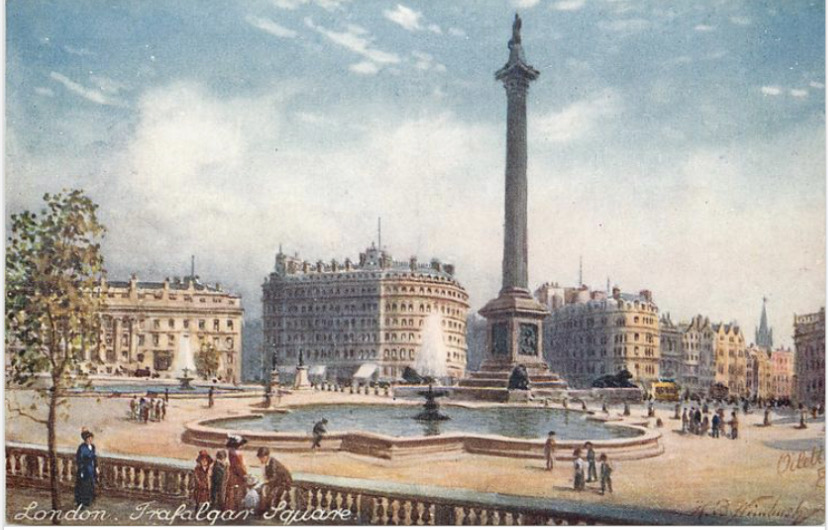
After his divorce in 1909, Hugo Tuck worked at the Stock Exchange. He lived at the Grand Hotel in Trafalgar Square and later at the Ivanhoe Hotel in Bloomsbury. Hugo continued to entertain his partner Willie Rolfe at both locations. The divorce papers reveal that Tuck liked living close to Piccadilly Circus in London’s West End theatre district. The Criterion Theatre in Piccadilly was popular with the gay community.

source: http://www.picryl.com
WHERE’S HUGO ?
Eventually, it appears Hugo became estranged from his family. In 1914, the London detective agency Walsh and Stockley placed an ad in The People requesting information about Hugo’s whereabouts in exchange for a reward.
HUGO’S ALIAS
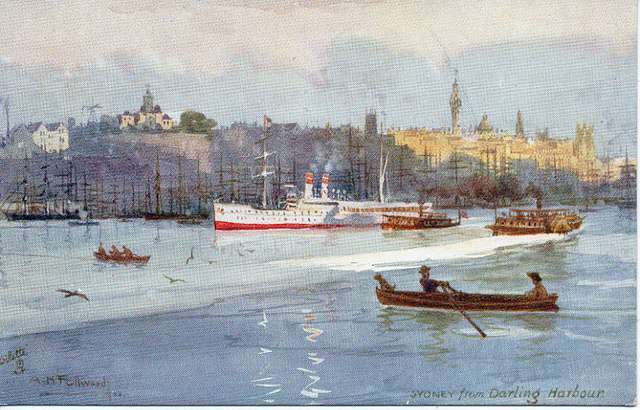
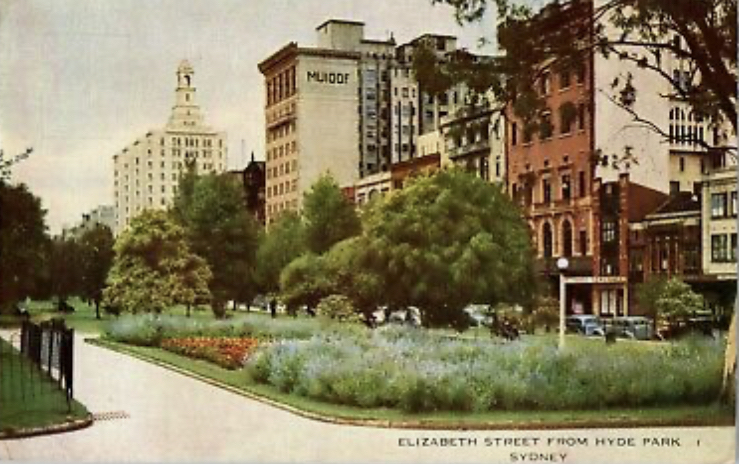
In 1915 Hugo emigrated to Sydney, Australia, where he assumed the name Albert Spencer. First he had an apartment on Macquarie Street, then he moved to Hunter Street. Both these streets overlook Sydney’s Botanical Gardens. Later Hugo moved to an apartment at 181A Elizabeth Street, overlooking Hyde Park. His flat was one of six above a car dealership. Next door was the Odd Fellows building (MUIOOF) and a synagogue which Hugo probably attended.
HUGO’S DOUBLE LIFE LEADS TO TRAGEDY
“Bertie” was a secretive and wealthy middle-aged man who wore gaudy diamond rings. His friends called him “The Diamond King.” Bertie liked to dine in fine restaurants and attend the theatre. According to T.F. Monk-Orran, “His callers were mostly young men and boys […] Albert Spencer was notoriously addicted to a vice it is not desired to name..” On April 12, 1919, Albert Spencer was found in his apartment, lying in a pool of blood. He died shortly afterward at Sydney Hospital.

Source: wikimedia commons
HUGO’S GAY LIFESTYLE EXPOSED
When the police searched Bertie’s apartment, they discovered that Albert Spencer was living under an assumed name. He was, in fact, Hugo Tuck. Letters from other men were found in a chest in Hugo’s flat. A policeman who conducted the search said he “had examined [the] deceased’s correspondence, and from what he had read he had not the slightest doubt that the man was addicted to unnatural practices.” Another chest was found that contained diamonds, cash, and gold. The press had a field day with “the Diamond King.”

THE MURDER SUSPECT
A week after Tuck’s death, the police arrested William Doyle, a seventeen-year-old errand boy for the New Zealand Hotel. He was described as “well-dressed, handsome and smart.” When the police searched William’s apartment at the hotel, they found the murder weapon, a pair of bloody trousers and several pawn shop tickets. The tickets revealed that Doyle had pawned Hugo’s watch on the day of his murder. When questioned, the suspected murderer confessed without showing emotion.
HUGO TUCK: REMITTANCE MAN
At the coroner’s inquest on May 8, 1919, a lawyer for Raphael Tuck & Sons denied “that [the] deceased was in any way connected with the firm of Messrs. Raphael Tuck and Sons.” Two days later, Triad magazine revealed that Albert Spencer was, in fact, Raphael Tuck’s youngest son Hugo. He was described as a “remittance man,” an emigrant living off money sent by relatives back home. Hugo’s sister Rose had been sending him money. The intermediaries were probably Rose’s husband Barnett Goodman and the solicitor Arthur Saville Cohen. These two men were Hugo Tuck’s executors. Apparently, Hugo and his siblings made an agreement-they would support him financially as long as he stayed out of England.

HUGO’S MURDERER CONFESSES
According to William Doyle’s confession, Tuck invited him to his apartment on September 12, 1919, to look at theatre magazines. Hugo made a pass at Doyle, putting his arms around the young man. Doyle grabbed a four-pound lead plumber’s bob off a nearby bedpost. He threatened Hugo, saying that he would hit him with it if he didn’t stop. Hugo ignored Doyle’s threat, so he hit Tuck in the head. Doyle claimed, “I did not know what character of a man [the] deceased was, and I only struck him in self-defense. […] At the time I did not think I had killed him.” Doyle washed the blood off his trousers under the tap in the bathroom. Then he panicked and ran off with the murder weapon, forgetting to turn the water off.
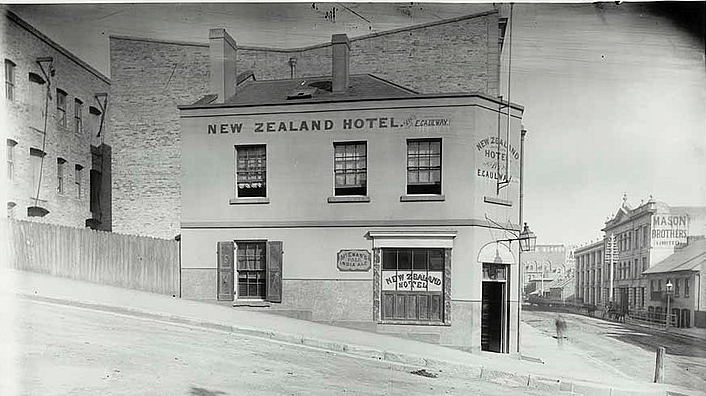
A WITNESS TESTIFIES
During the trial on June 6, 1919 Hugo’s landlady, Mrs. Rose Fitzpatrick described Hugo as “a harmless and refined gentleman [who] gave no trouble.” She testified that she had taken his breakfast up to his rooms at 9:00 a.m. The landlady found a “delicate young man” in the room with Hugo. They appeared to be good friends. The young man commented to Mrs. Fitzpatrick that he was leaving to get the morning paper. She left Hugo’s apartment immediately after Doyle. At 11:00 a.m., Mrs. Fitzpatrick saw water running down the steps from Hugo’s second floor apartment. She followed the flow of water up to Hugo’s flat and turned the tap off. The landlady found Hugo lying face down with his head bashed in. He was still bleeding, so she called the police. When they arrived, the cops sent Hugo off to Sydney Hospital in an ambulance. He died thirty minutes after arriving.
TESTIMONY RAISES QUESTIONS
William Doyle testified during the trial that Hugo knew him as “William Boyle.” He mentioned that he’d known Tuck since he was fifteen years old. A detective described Hugo’s diaries which recorded numerous meetings with “WB.” When he confessed, Doyle had told the police that he didn’t know Tuck was gay, which is hard to believe. He admitted corresponding with Hugo but denied having had “an improper relationship” with him. Yet Doyle was so afraid that he staged his own suicide- leaving his coat with a note in the pocket on a cliff above Sydney harbor.
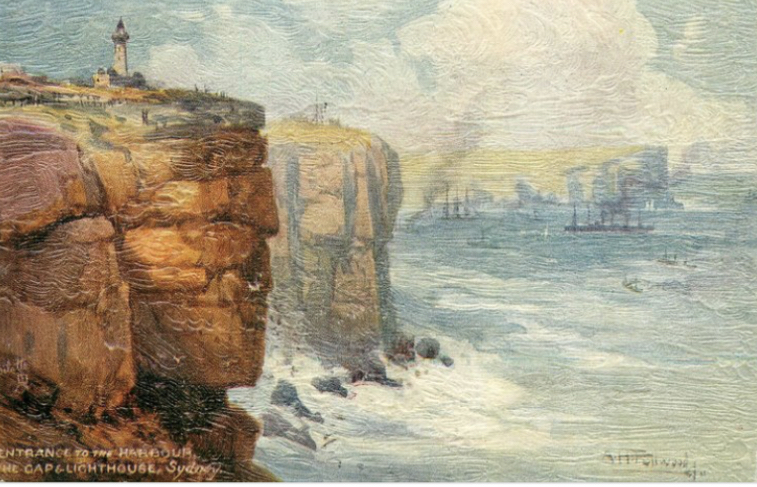
DID DOYLE HAVE A “BEARD” ?
A young girl named Gertrude Russell testified that she was Doyle’s fiance. She said that they had been dating for three years. In the evening, after Hugo’s murder the couple took a stroll in Hyde Park. Was she acting as his beard as Rosette had done for Hugo? After deliberating for over four hours, the jury returned a verdict of not guilty. William Doyle was set free.

THE BIG QUESTION UNANSWERED
Hugo Tuck’s murder was one of the most notorious cases in Australian history. It caused a sensation in Sydney. For weeks, the public discussed the testimony from the trial. They must have wondered why Doyle let Hugo believe that his name was Boyle. Why would he conceal his true name if they were just friends? Australian conviction for gay sex carried a sentence of life in prison. This may explain in part why both Hugo and Doyle used aliases.
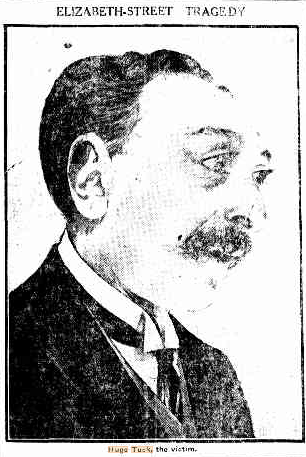
Source: http://www.trove.com
HOMOPHOBIA AND ANTISEMITISM
The papers cruelly described Hugo Tuck as a “degenerate” and a “menace” to society. They also thought Tuck’s Jewish heritage gave him an inherent “sinister trait.” Yet Hugo’s friends and acquaintances described him as “the kindest man with the sweetest nature, not at all aggressive.” One year after the trial, William Doyle was arrested for burglary and theft of watches, jewelry and other valuables. Some wondered if the jury had been too hasty in their decision.

Source: http://www.rookwood cemetery.discovereverafter.com
WHAT HAPPENED AFTER HUGO’S MURDER?
Hugo Tuck’s murder at age fifty-eight received no coverage in the British newspapers. His siblings could afford to ship Hugo’s body home to England for burial. However, they chose not to. Instead, he was buried in an unmarked grave at Rookwood Cemetery in a Sydney suburb. There was no obituary. A death notice in the London Times attributed Hugo’s demise to “a short illness in Sydney.” It’s as if Hugo Tuck was the guilty party instead of the victim.

Copyright 2023 Barbara A. Ross
Sources:
- “History of Raphael Tuck & Sons LTD, http://www.tuckdbpostcards.org
- “The Romance of the House of Raphael Tuck & Sons: The World’s Art Service. The Daily Telegraph, Tues. Dec 18 & 19, 1928 accessed via http://www.newspapers.com
- Raphael Tuck & Sons, Advertisement, The Christmas Bookseller, January 1882, p. 243. accessed via google books
- England & Wales Civil Divorce Record, 1858-1917 accessed via ancestry.com
- England & Wales Census 1871, 1881, 1891, 1911. accessed via ancestry.com
- “Murder Mystery: Elizabeth Street Tragedy” Sydney Sun, Apr 14 1919, p. 5 and also other articles: 4/15/1919, 4/16/1919, 4/19/19, 4/21/19, 5/8/19, 6/5/19
- “Who Killed Tuck?” The Sydney Sun, Thurs. Apr 17, 1919/ accessed via trove.com
- “Murder of Hugo Tuck” Sydney Morning Herald, Fri. April 18, 1919 p. 5
- “Tuck Tragedy: Youth Charged with Murder,” Sydney Morning Herald, Tues. April 22, 1919, p. 7. accessed via newspapers.com
- “Hugo Tuck’s Murderer Confesses” The Albury Banner & Wodonga Express, Fri. April 25, 1919, p. 32. accessed via trove.com
- “Trial of William Doyle” Sydney Morning Herald, May 6, 1919, p.5
- “Tuck Tragedy: Doyle Committed for Trial” Sydney Morning Herald, May 9, 1919 p. 8 accessed via trove.dom
- Monk-Owen, T.F. “Who Killed Hugo Tuck?” The Triad, v4 #8, May 10, 1919
- “Death Notice” reprinted from The London TImes in The Bulletin, Sydney, July 24, 1919. accessed via trove.co,
- “1919 Sydney Murder of Gay Englishman Hugo Tuck.” (Sydney) Daily Telegraph, Nov. 26, 2021. accessed via trove.com
- “Re Hugo Tuck, Deceased.” (probate notice) The London Gazette, vol. 2 p 4077. 1920. accessed via newspapers.com
- The Bulletin, Sydney Australia, May 2, 1956 accessed via trove.com
/#RaphaelTuck&Sons #HugoTuck #RaphaelTuck #postcardpublishers #artistsignedpostcards #artist-signedpostcards #postcardcollecting #postcardcollectors
 Artist-Signed Postcards
Leave a comment